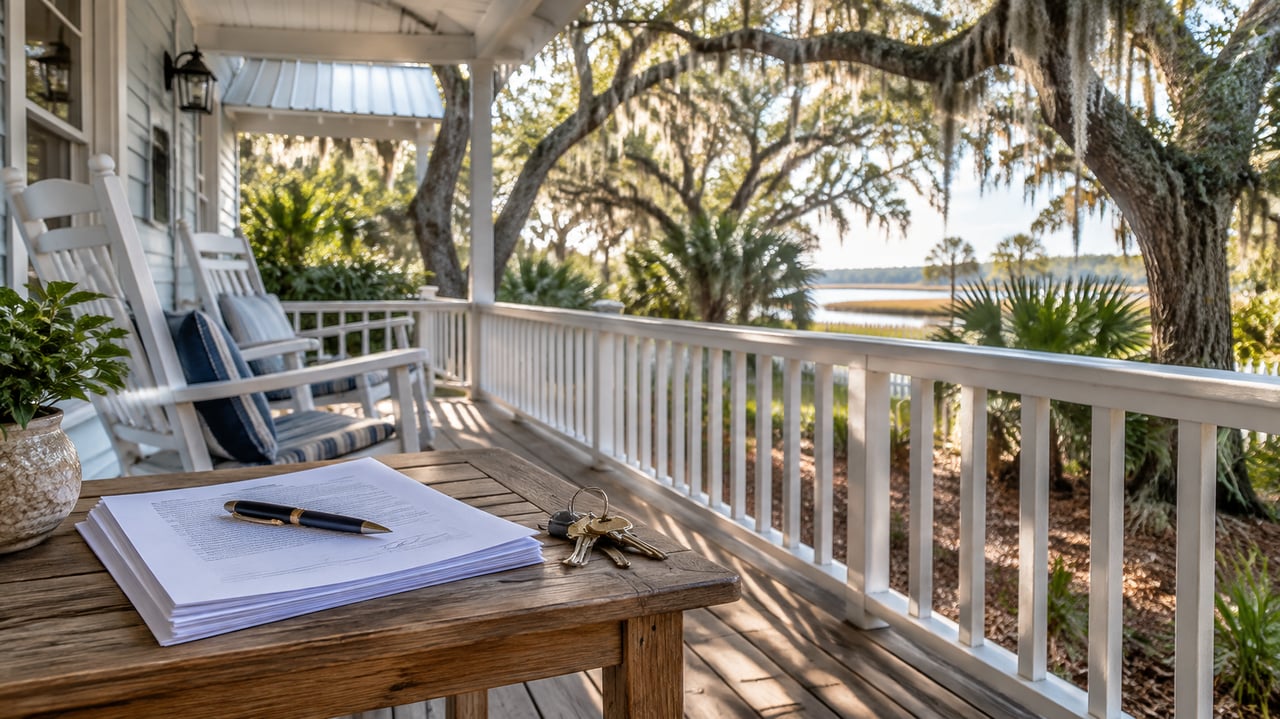
Florida Homestead Exemption and Portability After Amendment 3
Buying
Two questions come up at almost every closing on Amelia Island. What does homestead actually do for me, and can I bring my old tax savings with me? Since the November 3 election there is a third: what did Amendment 3 just change?
This post walks through the Florida homestead exemption, portability of the Save Our Homes cap, and what Amendment 3 does starting in 2027. The short answer: homestead is worth more than ever, and the March 1 deadline still rules everything. Buyers moving from out of state need to read the fine print on timing.
I am a real estate agent, not a tax professional. The rules below come from the Florida Department of Revenue, the Nassau County Property Appraiser and the Legislature. For your own numbers, call the appraiser or your CPA.
The exemption lowers the value you are taxed on. The cap limits how fast that value can grow. Most owners focus on the first and gain more from the second.
Under current law, the Florida Department of Revenue describes two pieces. The first $25,000 of assessed value is exempt from all property taxes, including school taxes. A second exemption of up to $25,000 applies to assessed value above $50,000 and covers non-school taxes only. To qualify, the home must be your permanent residence as of January 1. You file Form DR-501 with the county property appraiser by March 1.
The cap is Save Our Homes. Once you have homestead, the St. Johns County Property Appraiser explains, your assessed value can rise no more than 3 percent a year, no matter what the market does. After a decade in a rising market, the gap between what your home is worth and what you are taxed on can be enormous. That gap is your Save Our Homes benefit.
Portability moves that gap, not the exemption itself. The Department of Revenue is blunt about it: you cannot transfer your homestead exemption when you move. You may transfer all or part of your assessment difference, which lowers the assessed value of the new home. You apply for a new exemption on the new house and file Form DR-501T, the portability form, alongside it. Both are due March 1.
The rules that matter:
- You have three tax years from the year you give up the old homestead to use the benefit. A homestead given up in December burns one of those years almost immediately. - The most you can transfer is $500,000 of assessment difference. - If the new home's just value is equal to or higher than the old one, the full benefit transfers, up to the cap. - If you downsize, a proportional share transfers. Move to a home worth half as much and you carry half the benefit.
This is why a long-time Florida owner can buy a bigger island house and still pay less tax than a newcomer. The Nassau County Property Appraiser takes applications online or in person. Tax year 2027 applications are open through March 1, 2027. Bring a Florida driver license showing the new address, your Florida vehicle registration, your voter registration, and your Social Security number.
Florida voters approved Amendment 3 on November 3, 2026, with about 62 percent of the vote, as reported by News4Jax. The Legislature put it on the ballot as CS/HJR 1-F in a June special session, and it takes effect January 1, 2027.
Here is what changes, according to the Florida Chamber's summary of the amendment:
- The homestead exemption for non-school taxes rises to $150,000 in 2027 and $250,000 in 2028, then adjusts for inflation. - The $25,000 exemption for school taxes stays as it is. - The annual cap on assessment increases for non-homestead property drops from 10 percent to 5 percent for non-school levies. That covers rentals, second homes and commercial property. - Counties and cities must spend property tax revenue on a defined list: public safety, education, infrastructure, natural resources, debt, retirement obligations and operations.
The Legislature still has to pass implementing laws in the 2027 session. Until then the exact mechanics, including how the larger exemption meets Save Our Homes and portability, are not final. The proposed-tax notice the appraiser mails each summer will be the first place you see it.
If you were not a Florida resident on December 31, 2026, you do not get the bigger exemption right away. Under the ballot language, new residents receive the existing homestead exemption when they first qualify. The increased exemption starts in their fifth year of exemption. The Chamber's timeline puts the first wave of new residents into the larger exemption after January 1, 2032.
For my relocating clients, that changes the math on when to establish residency. A resident in a home on Amelia Island on January 1, 2027, stands apart from a buyer who closes in February. If you are on the fence about a move this winter, this is the year the date matters. I covered the rental side of that decision in Amelia Island in Winter, and the county's tax calendar in Nassau County Property Taxes, Explained.
How much is the Florida homestead exemption in 2027?
Up to $150,000 for non-school taxes under Amendment 3, plus the $25,000 that applies to all taxes including schools. It rises to $250,000 for non-school taxes in 2028 and is indexed to inflation after that. New Florida residents get the existing exemption first and the larger one in their fifth year.
Can I transfer my homestead exemption to a new house in Florida?
Not the exemption itself; you reapply for that. You can transfer the Save Our Homes assessment difference, up to $500,000, within three tax years of leaving the old home. File Form DR-501T with your new homestead application.
What is the deadline to file for homestead in Nassau County?
March 1 of the tax year, and the home must have been your permanent residence on January 1. For 2027, applications are open now through March 1, 2027.
Most buyers ask me this question late in the process, after they have fallen for a house. The better time is before you write the offer, when the Save Our Homes math can change which house makes sense. I run it with you using the appraiser's own numbers, including what you could port from a prior Florida home.
Already own here and weighing a move up or a downsize? I can show you how much of your cap travels with you. You will know what the new home would be taxed at before you list. Start with my home valuation for your current house, or pull listings on my home search and send me the ones you like.
lifestyle
What to see, do and eat in Fernandina Beach and around the island.
buying
Direct hurricane hits here are rare, but surge, flood zones and insurance decide what a home really costs. Here is how I walk buyers through it.

Buying
What the Florida homestead exemption and Save Our Homes portability do for you, and how Amendment 3 changes the numbers starting in 2027.

lifestyle
Every paved trail, bike lane and park loop on Amelia Island, the 2026 e-bike rules, and a route map you can take with you.
lifestyle
Mild weather, empty beaches, right whales offshore and one rental tax rule every snowbird should know before booking a winter stay on Amelia Island.
Get personalized guidance from Jon Bell and take the next step toward buying or selling with confidence.