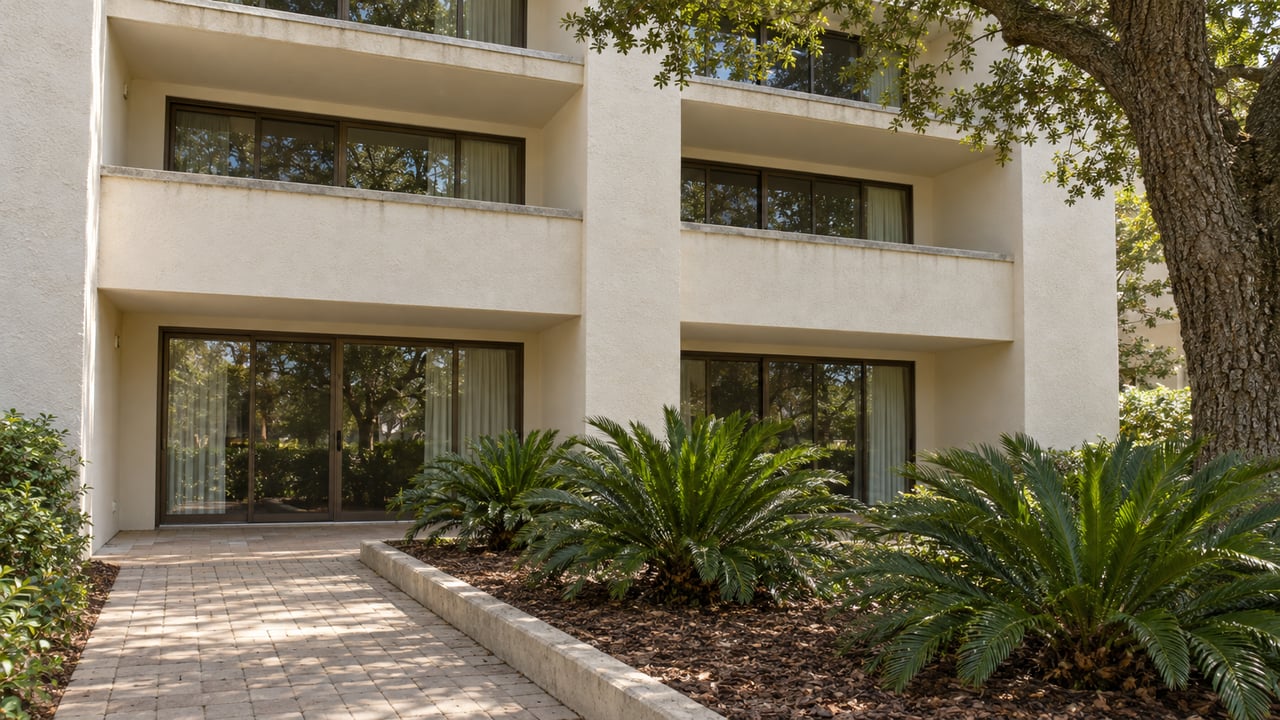
Buying an Amelia Island Plantation Condo? Read the Reserve Study Before You Read the Listing
What will a unit at Ship Watch Villas cost to own two years from now? The monthly dues on the listing describe only the current budget. A better guide is the association's Structural Integrity Reserve Study, a document most buyers open only after they sign a contract. For Ship Watch, it is dated August 20, 2024.
Before Surfside, Florida condo owners could vote to put less into reserves than a study called for, and many did. That option is gone for the structural items the law lists. In unit-owner-controlled associations that must have a study, members cannot vote to waive or underfund those reserves in budgets adopted after December 31, 2024. The statute leaves a few narrow alternatives: qualifying loans, lines of credit, and a temporary pause on some funding tied to milestone repairs. Once owners can't vote the number down, the study's funding schedule becomes the best preview of where dues are headed.
The revised Ship Watch study is public, and it makes the point concrete. It covers a 94-unit community developed in 1975. Its funding scenario models $198,000 in first-year reserve contributions, averaging $176 per unit per month, with no special assessments.
The same study projects balcony work in successive years:
| Year | Projected balcony work, Ship Watch SIRS |
|---|---|
| 2024 | $100,800 |
| 2025 | $128,581 |
| 2026 | $204,618 |
These are planning figures from a 2024 model. They don't show what the association actually billed or what work was done. That gap is the useful part for a buyer. The model shows the plan, and the current budget, the minutes and any assessment notices show whether the building followed it. Reading the two together tells you more about a seven-story building from the 1970s than the dues line on the listing can.
The Florida Department of Business and Professional Regulation, or DBPR, keeps a database of submitted reserve studies. CondoDueDate has matched it against the state's condo file, using a condo-file snapshot from October 3, 2026 and a SIRS pull from October 5, 2026. Here are the older mid-rises and villa communities within Amelia Island Plantation or on Beachwalker Road:
| Community | Units | Built or declared | Floors | SIRS completed |
|---|---|---|---|---|
| Beach Wood Villas | 136 | 1973 | 3 | July 24, 2024 |
| Beach Walker Villas | 96 | 1973 declaration, 1974 build | 7 | November 9, 2023 |
| Ship Watch Villas | 94 | 1973 | 7 | August 20, 2024 |
| Sea Dunes | 58 | 1984 | 7 | October 14, 2024 |
| Turtle Dunes | 58 | 1983 | 7 | March 8, 2024 |
| Windsong | 33 | 1979 | 5 | September 5, 2024 |
Almost every first study in this group was finished in 2023 or 2024. That puts the plantation's mid-rises ahead of the deadline and means their first full budgets under the no-waiver rule were adopted for 2025 and 2026. A buyer looking today is likely seeing dues that already reflect a funded plan, or are moving toward one. Comparing this year's budget with last year's will show which.
Across the island, 20 of the 28 condo communities with 25 or more units were built or declared before 1997. DBPR lists a reserve study for at least 14 of those 20. Some older communities show no filing, including Mariner's Walk Amelia Island Plantation, a 30-unit community dated 1975. DBPR says its database shows only completed forms that associations submit, so a missing entry doesn't prove a study was never done. In that case the buyer asks the association for its study or for the statement that one is incomplete.
Building height matters too. Both the milestone inspection and the SIRS apply to condo buildings with at least three habitable stories. Beach Wood Villas reports three floors, so whether the rules reach it depends on whether all three count as habitable stories, a question the floor count alone can't settle.
The reserve study covers the money, and its engineering counterpart is the milestone inspection. Florida requires an inspection when a qualifying building reaches 30 years from its certificate of occupancy, then every 10 years. Local building officials may start the clock at 25 years based on local conditions, and the statute names salt-water proximity as one of them. Buildings that were already 30 before July 1, 2022 had a first deadline of December 31, 2024.
If the certificates of occupancy for the 1970s and early-1980s buildings above match their build or declaration years, their first inspections would have been due by the end of 2024. Public records reviewed for this post don't confirm whether any particular building completed one. For Amelia Island, the notices and the Phase 1 and Phase 2 reports are kept by Nassau County Building & Community Services.
The two halves are connected by a deadline that is now close. Existing owner-controlled associations generally had to finish their study by December 31, 2025. An association with a milestone inspection due on or before December 31, 2026 may complete both together, but the study must be done by December 31, 2026, which is less than three months from today. That rule came out of HB 913, approved June 23, 2025.
This is where buyers feel the friction. Under section 718.503 of the Florida Statutes, a resale buyer is entitled to these documents at the seller's expense:
The contract also has to carry the applicable inspection and study disclosures. The buyer may cancel within seven days after signing and receiving the documents. Saturdays, Sundays and legal holidays don't count toward those seven days. Seven days is enough to read a reserve study closely if you know where to look: the funding plan, the components with large near-term costs like Ship Watch's balcony line, and whether the current budget matches the plan. It isn't much time if the buyer is reading the study for the first time when the packet arrives.
Sellers feel the same clock in reverse. If the packet is assembled before listing, the buyer's review starts as soon as the contract is signed and nobody waits on the management office while the window runs.
Financing is the next place a building's condition shows up. Fannie Mae says lenders assess condo projects. A project that fails its requirements can't be sold to Fannie Mae until the issues are resolved, and the company doesn't share eligibility decisions with buyers or other outside parties. Conditions it lists as possible reasons for ineligibility include critical repairs, inadequate insurance, significant litigation, and some hotel or short-term-rental operating models. That last item is worth checking early in a resort community.
The Tampa Bay Times reported that assessment delinquencies made a Pompano Beach building ineligible for Fannie Mae and Freddie Mac-backed loans. Nothing in the research for this post shows a similar problem at any Amelia Island Plantation association. The example shows how directly an association's finances can affect loan eligibility.
Rising costs are also not only about reserves. The Miami Herald reported that in Miami-Dade, fees for condos in buildings of three or more stories rose 42% from 2022 to 2025, citing FIU's Metropolitan Center. Average association commercial multi-peril premiums there rose from $175,000 in early 2021 to $462,000 by late 2024. Those are South Florida figures, but they show why the insurance line in an Amelia Island budget deserves the same attention as the reserve line.
Statewide, Florida Realtors reported 7,291 condo and townhouse closings in August 2026, down 1.8% from a year earlier. The median sale price was $298,000, and the median time to contract was 69 days. Statewide supply was 7.7 months that August. In a market with that much choice, a building whose documents are complete, current and consistent gives buyers fewer reasons to look elsewhere.
When is the next study due for buildings that finished in 2024? A completed SIRS must be redone at least every 10 years, so a study finished in 2023 or 2024 points to a next study by 2033 or 2034.
Can a buyer get the inspection summary before making an offer? The statute guarantees it to a buyer as part of the resale package once a contract is signed. Before that, there is no statutory right for the buyer. The current owner can ask the board for the inspection summary and the SIRS, though, and share them with interested buyers before an offer.
Does a recent build year mean the rules don't apply yet? They apply on a later schedule. Dunes Club Villas, for example, was declared in 2003. If its certificate of occupancy dates from that year, its first milestone inspection would fall at the end of 2033, and it already has a study on file dated August 21, 2024.
This post is general information about how Florida's condo rules work. It isn't legal or financial advice, so confirm how they apply to a specific building with a Florida real estate attorney, your lender or the association.
If you're weighing a unit at Beach Walker, Ship Watch, Sea Dunes or another plantation building, or getting a condo ready to list before the year-end study deadline, Jon Bell can help you request the reserve study, budget and inspection summary early and review them with you before the seven-day window starts. Let's Connect.
lifestyle
From Timoti's to Salt at the Ritz-Carlton, here is what your favorite Amelia Island restaurant says about you, and how you might like to live here.
buying
What the Nassau County property tax rate is, why your bill will differ from the seller's, and the homestead deadline new Amelia Island owners miss.
Why Identical Amelia Island Homes Sell for Different Prices
Put the two threads together and downtown is placing two different bets at the same time.
Get personalized guidance from Jon Bell and take the next step toward buying or selling with confidence.