In Amelia Island Plantation, the Cheaper Home Can Cost More to Own
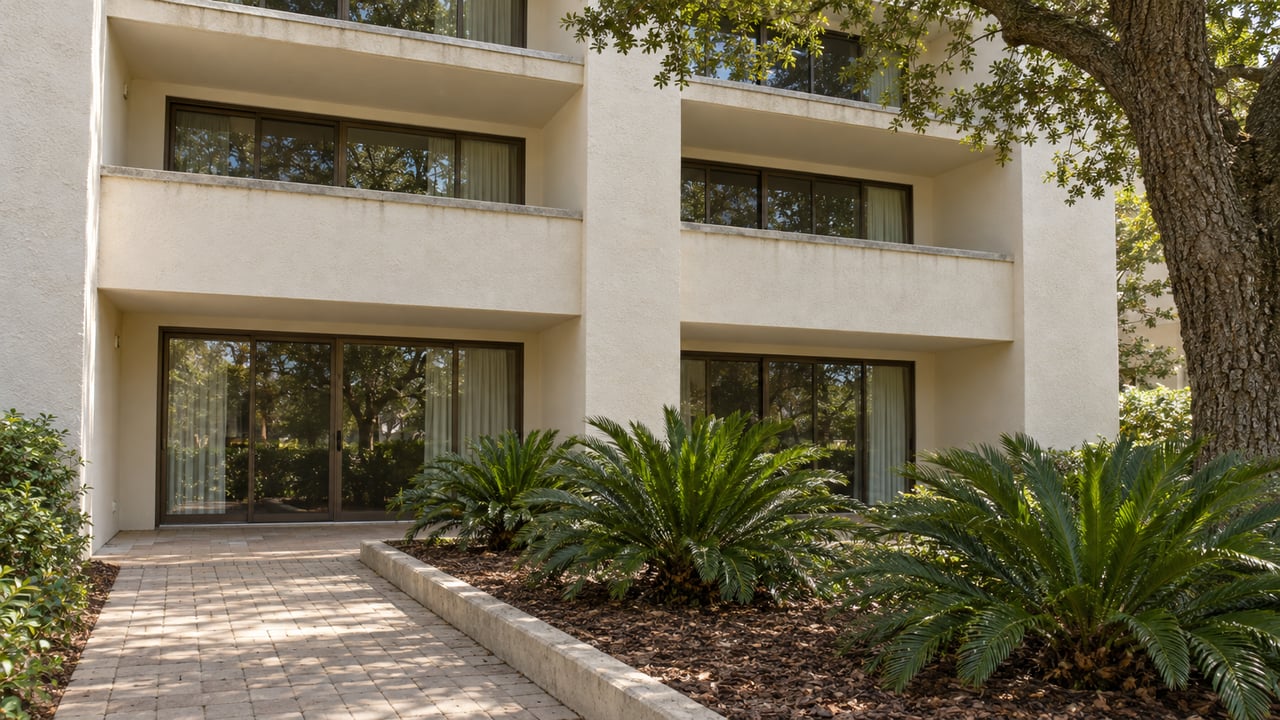
Two buyers are looking at homes in Amelia Island Plantation this fall, both around $800,000. One is in Little Dunes, the gated enclave of Key West and Nantucket-style townhomes built around one of the Plantation's championship golf courses. The other is in Marsh Creek Village, on the marsh side of the community among the oak trees. The listings look almost identical on paper: similar square footage, similar price, same gated community, same general access to the Plantation's beach and trails.
Their annual dues are not close. The Marsh Creek Village home carries a flat association fee of $1,675 a year. The Little Dunes home carries that same $1,675 HOA charge plus a quarterly maintenance assessment of $1,589, which adds up to roughly $8,031 a year once you combine the two. Same price band, same island, a gap of more than $6,000 a year in what it costs to keep the lights on.
That gap is not a mistake or an outlier. It is how Amelia Island Plantation is built, and it explains why the HOA number on a listing sheet is rarely the whole answer to what a property will cost you to hold.
Amelia Island Plantation runs on two layers of association, not one. At the top sits the Amelia Island Plantation Community Association, the master association that every owner belongs to. AIPCA maintains the shared infrastructure across the 1,350-acre community: two community centers, multiple parks, beach access points, the lakes and lagoons, roads, trails, bridges, drainage, and the security gates. Its board has eleven members, nine elected by property owners and two appointed by the Omni Amelia Island Resort, which itself pays into AIPCA as a commercial property owner.
Below that master layer, the Plantation is divided into 33 separate condo, home, villa, and property owner sub-associations. Each one runs its own budget, covering costs like water, lighting, pool maintenance, landscaping, and boardwalks specific to that pocket of the community. Each has its own declaration, its own bylaws, and its own board setting assessments.
That structure is why a single-family lot in Marsh Creek Village or Long Point, where the sub-association mostly maintains gates and common landscaping, can carry a flat few thousand dollars a year, while a townhome or condo building like Little Dunes or Spyglass Villas, where the sub-association is also responsible for roofs, exterior walls, and shared amenities, runs a heavier bill. Published fee ranges for Spyglass Villas condos, priced from roughly $575,000 to $620,000, list an HOA of $1,675 a year on top of a $1,052 monthly condo fee, which works out to more than $14,000 a year combined. That is a higher annual carrying cost than some single-family homes in Long Point priced two to three times as much.
None of this shows up as a single line on a portal listing. It shows up when you ask for the specific sub-association's budget and reserve study, which is worth doing before you write an offer rather than after.
There is a second cost that catches people off guard because it is not a recurring fee at all. It is a one-time charge due at closing, and it is not built into the purchase price.
AIPCA calls it the Contribution to Reserves Fee: a real estate transaction fee equal to 0.5% of the sale price, paid by the purchaser every time ownership of a property in the Plantation changes hands. On a $1.75 million sale, that is $8,750 added to the buyer's side of the closing statement, on top of the usual title work, recording fees, and prorated dues. On the $800,000 home in Little Dunes from the earlier example, it is $4,000.
This fee applies on every transfer, not just the first sale after construction, so a buyer who assumes they have priced out the full cost of a purchase from the mortgage estimate and the HOA line alone is likely missing several thousand dollars. It is a fair question to raise with a lender early, since some buyers plan around a rough closing cost percentage that does not account for a Plantation-specific charge like this one.
A common assumption among out-of-area buyers is that owning in Amelia Island Plantation means paying into the Amelia Island Club, the private club with the Ocean Clubhouse, the Long Point golf course designed by Tom Fazio, and the Omni-owned Oak Marsh course designed by Pete Dye. It does not work that way. Under the association's current structure, all Plantation property owners are eligible, but not required, to join the Amelia Island Club.
The club offers three membership tiers, Full Equity, Sport Equity, and Beach Equity, each with a different mix of golf, tennis, fitness, and dining access, and each priced separately from AIPCA or sub-association dues. The Ocean Clubhouse itself went through a $10 million renovation completed in 2020 that expanded it to 23,000 square feet, which is part of why membership carries its own separate cost structure rather than being folded into a flat community fee.
Whether membership should eventually become mandatory for all owners has come up in past community discussions, but that has not changed the opt-in structure that governs purchases today. A buyer deciding whether to join, and at what tier, is making a lifestyle and budget decision that is genuinely separate from the decision to buy the property itself, and it is worth treating it that way rather than assuming the cost is already baked in.
None of this line-item detail mattered as much when homes were moving quickly and buyers were competing on speed rather than terms. That is not where the broader Amelia Island and Fernandina Beach market sits right now.
Based on realMLS data through late June 2026, the combined Amelia Island and Fernandina Beach market is running as a buyer's market, with a median sold price around $1.75 million, homes taking about 86 days to sell, and roughly 16.8 months of supply on hand. Current listings are asking about 8% more per square foot than recent closed sales, which is the kind of gap that tends to leave room for negotiation rather than compress it. Prices are down about 21% over the past year, though they remain up roughly 120% since 2015, so the slowdown reads as a cooling from a long run-up rather than a reversal of it.
On the south end of the island, where Amelia Island Plantation sits, condo sales tell a similar story of a slower pace. The area recorded 58 condo sales in 2025, down from 65 in 2024, even as prices in both years ranged from roughly $350,000 to $3.85 million. Fewer transactions across a similar price spread points to buyers taking more time per deal rather than the market pulling back sharply on value.
That extra time matters for a community with a fee structure this layered. When a home sits on the market for weeks rather than days, there is room to ask for the sub-association's last reserve study, to get a written answer on what the Contribution to Reserves Fee will total at your price point, and to decide deliberately whether a club membership fits your plans before you are three weeks from closing. A fast market punishes that kind of homework. A slower one rewards it.
Is the AIPCA fee separate from my neighborhood's HOA dues? Yes. AIPCA is the master association covering shared community infrastructure. Each of the 33 sub-associations within the Plantation sets and collects its own separate dues for costs specific to that neighborhood or building.
Do I have to join the Amelia Island Club if I buy in the Plantation? No. Ownership makes you eligible to join, but membership is optional under the association's current rules, and it is priced and billed separately from any HOA or master association fee.
Who pays the Contribution to Reserves Fee, the buyer or the seller? The buyer. AIPCA structures it as a purchaser-paid transaction fee equal to 0.5% of the sale price, due at closing each time a property in the Plantation changes hands.
If you are comparing homes in Amelia Island Plantation and want the actual annual carrying cost for a specific address before you write an offer, not just the HOA line on the listing, reach out to Jon Bell. Let's Connect and go through the sub-association budget together.
This article is general information, not legal, tax or financial advice. Consult a qualified professional about your situation.
lifestyle
From Timoti's to Salt at the Ritz-Carlton, here is what your favorite Amelia Island restaurant says about you, and how you might like to live here.
buying
What the Nassau County property tax rate is, why your bill will differ from the seller's, and the homestead deadline new Amelia Island owners miss.
Why Identical Amelia Island Homes Sell for Different Prices
Put the two threads together and downtown is placing two different bets at the same time.
Get personalized guidance from Jon Bell and take the next step toward buying or selling with confidence.